
Mountain Gorillas: Understanding Gorilla Trekking, Habitat, Diet, Population, Behavior, Lifespan & Conservation
Mountain gorillas are among the most fascinating and endangered primates on Earth. These remarkable great apes are famous for their intelligence, powerful physical presence, gentle social nature, and deep family bonds. Found only in the high altitude forests of East and Central Africa, mountain gorillas have become one of Africa’s most iconic wildlife species and a major attraction for travelers seeking unforgettable gorilla trekking experiences.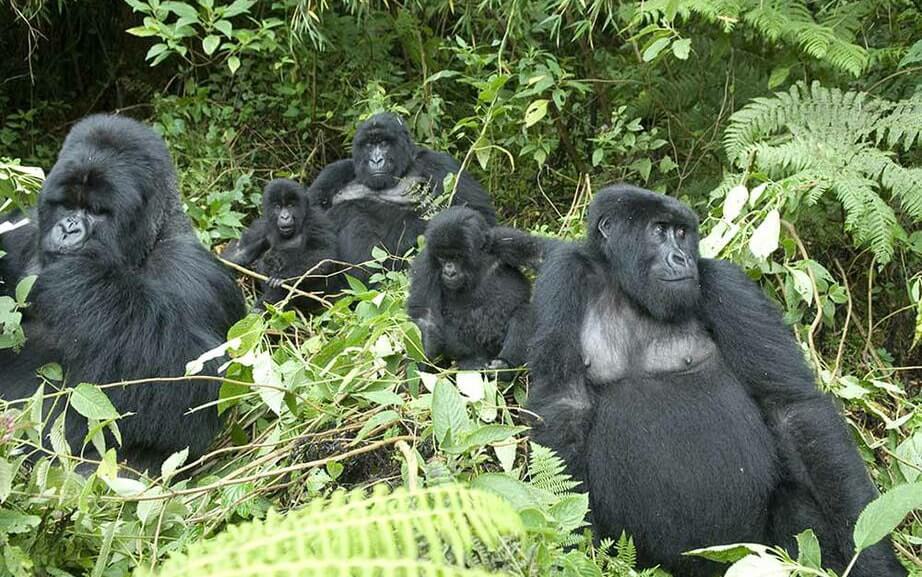
For many wildlife enthusiasts, seeing mountain gorillas in their natural habitat is a once in a lifetime experience. Standing just a few meters away from a silverback or watching a playful infant tumble through forest vegetation creates an emotional connection that few wildlife encounters can match.
Mountain gorillas are not only important because of their rarity but also because they offer valuable insight into primate behavior and evolution. Their close genetic relationship to humans makes them one of our nearest living relatives.
This comprehensive guide covers everything you need to know about mountain gorillas, including their habitat, diet, behavior, social structure, reproduction, lifespan, population, conservation status, and gorilla trekking experiences in Uganda and Rwanda.
What Are Mountain Gorillas?
Mountain gorillas are a subspecies of the eastern gorilla and are scientifically known as Gorilla beringei beringei.
They are one of the two subspecies of eastern gorillas, the other being the eastern lowland gorilla.
Mountain gorillas are among the largest living primates in the world. They are powerful, muscular, and highly intelligent animals with strong social bonds and complex communication systems.
One of the most fascinating facts about mountain gorillas is their genetic similarity to humans.
They share approximately 98 percent of their DNA with humans, making them one of our closest relatives after chimpanzees and bonobos.
Mountain gorillas are primarily ground dwelling and spend most of their time foraging, socializing, resting, and caring for young members of their family groups.
Here is a richer, more detailed replacement for that section that gives each park more depth while staying readable and SEO friendly:
Where Do Mountain Gorillas Live?
Mountain gorillas are found in only two isolated populations in East and Central Africa, making them one of the rarest great apes on Earth. Their habitat is limited to the cool, mist covered montane forests of the Virunga Massif and Bwindi Impenetrable Forest.
These remarkable primates live in four protected national parks spread across Uganda, Rwanda, and the Democratic Republic of Congo. Each park offers unique landscapes, trekking experiences, and conservation significance.
Bwindi Impenetrable National Park, Uganda
Bwindi Impenetrable National Park is the most important mountain gorilla habitat in the world and is home to nearly half of the global mountain gorilla population.
Located in southwestern Uganda along the edge of the Albertine Rift Valley, Bwindi is one of Africa’s oldest and most biologically diverse rainforests, estimated to be over 25,000 years old.
The park covers more than 320 square kilometers of dense tropical forest characterized by:
- Thick tangled vegetation
- Deep valleys
- Steep ridges
- Ancient hardwood trees
- Dense undergrowth
Bwindi’s thick forest gives it the name “impenetrable,” as trekking through its vegetation can be physically demanding.
The park is divided into four major gorilla trekking sectors:
Buhoma Sector
The most popular and historically established trekking area, known for excellent lodges and easy access.
Ruhija Sector
Known for beautiful forest scenery, birdlife, and quieter trekking routes.
Rushaga Sector
Home to the largest number of habituated gorilla families and the only sector offering the gorilla habituation experience.
Nkuringo Sector
Famous for dramatic hills, breathtaking views, and more challenging treks.
Bwindi is also a UNESCO World Heritage Site and supports over:
- 120 mammal species
- 350 bird species
- Hundreds of tree and butterfly species
It is the only place in the world where visitors can enjoy both standard gorilla trekking and the exclusive gorilla habituation experience.
Mgahinga Gorilla National Park, Uganda
Mgahinga Gorilla National Park is Uganda’s smallest national park, but it is one of its most scenic and ecologically significant protected areas.
Located in southwestern Uganda, Mgahinga forms part of the larger Virunga Conservation Area, which extends into Rwanda and the Democratic Republic of Congo.
The park covers approximately 33.7 square kilometers and is dominated by three extinct volcanoes:
- Mount Muhabura
- Mount Gahinga
- Mount Sabyinyo
Its landscapes include:
- Bamboo forests
- Afro montane woodland
- Alpine vegetation
- Volcanic slopes
Mgahinga is home to the Nyakagezi Gorilla Family, the only habituated gorilla group available for trekking in the park.
This family is especially famous for its stable presence and impressive silverbacks.
What makes Mgahinga unique is its combination of gorilla trekking and volcano hiking opportunities.
Visitors can combine gorilla trekking with activities such as:
- Golden monkey tracking
- Hiking Mount Sabyinyo
- Exploring the Batwa cultural trail
Because it receives fewer visitors than Bwindi, Mgahinga offers a more intimate and less crowded trekking experience.
Volcanoes National Park, Rwanda
Volcanoes National Park is Rwanda’s premier gorilla trekking destination and one of Africa’s most iconic wildlife conservation areas.
Located in northwestern Rwanda near the town of Musanze, the park forms part of the Virunga Massif and spans approximately 160 square kilometers.
It is characterized by dramatic volcanic scenery and lush montane forests surrounding five extinct volcanoes:
- Karisimbi
- Bisoke
- Muhabura
- Gahinga
- Sabyinyo
The park’s terrain includes:
- Bamboo forests
- Open montane meadows
- Afro alpine vegetation
- Dense volcanic slopes
Volcanoes National Park gained international recognition through the pioneering gorilla conservation work of Dian Fossey, whose research transformed global understanding of mountain gorillas.
Today, the park is known for:
- Luxury gorilla trekking experiences
- High end lodges
- Short transfer times from Kigali
- Excellent tourism infrastructure
One major advantage is accessibility.
Travelers can reach the park from Kigali International Airport in approximately two and a half hours by road, making it ideal for shorter gorilla safari itineraries.
Volcanoes National Park is particularly popular with luxury travelers seeking premium gorilla trekking experiences.
Virunga National Park, Democratic Republic of Congo
Virunga National Park is Africa’s oldest national park and one of the most biologically important protected areas on the continent.
Established in 1925, it is a UNESCO World Heritage Site located in eastern Democratic Republic of Congo.
The park covers more than 7,800 square kilometers, making it by far the largest mountain gorilla habitat.
Virunga’s diverse landscapes include:
- Volcanoes
- Lava plains
- Tropical forests
- Wetlands
- Savanna ecosystems
The park forms a vital part of the Virunga Massif mountain gorilla ecosystem.
Virunga is home to several habituated gorilla families and has historically offered some of the most adventurous gorilla trekking experiences in Africa.
The park is also famous for:
- Mount Nyiragongo volcano
- Rare wildlife diversity
- Exceptional conservation programs
However, political instability and security concerns have periodically affected tourism operations.
Despite these challenges, Virunga remains one of the world’s most important conservation strongholds for mountain gorillas.
The dedication of rangers and conservation teams in Virunga has played a critical role in protecting gorilla populations under extremely difficult conditions.
Together, these four parks represent the only places on Earth where mountain gorillas survive in the wild.
Their protection is essential not only for mountain gorilla conservation but also for preserving one of Africa’s most extraordinary natural ecosystems.
Mountain Gorilla Habitat
Mountain gorillas inhabit high altitude tropical and montane forests.
Their habitat ranges between 2,200 and 4,300 meters above sea level.
These environments include:
- Dense bamboo forests
- Montane cloud forests
- Sub alpine vegetation zones
- Thick undergrowth rich in herbs and shrubs
These cool and misty forests provide:
- Abundant vegetation for feeding
- Shelter from predators
- Safe nesting sites
- Suitable climate conditions
Their thick dark fur is an adaptation to these cold mountainous environments.
Unlike lowland gorillas, mountain gorillas have longer and denser coats to survive lower temperatures.
Physical Characteristics of Mountain Gorillas
Mountain gorillas are massive, muscular primates with distinct physical features.
Size and Weight
Adult males (silverbacks):
- Height: Up to 1.8 meters when standing
- Weight: 140 to 220 kilograms
Adult females:
- Weight: 70 to 110 kilograms
Distinct Features
Mountain gorillas can be identified by:
- Thick black fur
- Broad chest and shoulders
- Large muscular arms
- Hairless face, palms, and feet
- Unique nose prints for individual identification
Every mountain gorilla has a unique nose print, similar to a human fingerprint.
Social Structure of Mountain Gorillas
Mountain gorillas are highly social animals that live in family groups.
These groups are led by a dominant adult male called the silverback.
A typical group includes:
- One dominant silverback
- Several adult females
- Juveniles
- Infants
- Sometimes subordinate males
Group sizes typically range from 5 to 30 individuals.
The Role of the Silverback
The silverback is the protector and leader of the group.
His responsibilities include:
- Leading daily movement
- Protecting the family from threats
- Mediating disputes
- Deciding feeding and nesting locations
- Caring for vulnerable group members
Silverbacks are powerful but generally calm.
Aggression is usually displayed only when defending the group.
Mountain Gorilla Behavior
Mountain gorillas are known for their calm and gentle behavior.
Despite their immense strength, they are peaceful animals.
Their daily activities include:
Feeding
They spend a large portion of the day foraging.
Resting
After feeding, gorillas rest and socialize.
Grooming
Social grooming helps strengthen family bonds.
Playing
Young gorillas frequently wrestle and tumble together.
Nest Building
Each evening, gorillas build fresh nests using vegetation.
Infants usually share nests with their mothers.
Communication Among Mountain Gorillas
Mountain gorillas use both vocal and physical communication.
Their vocal sounds include:
- Grunts
- Hoots
- Roars
- Barking sounds
Physical communication includes:
- Chest beating
- Body posturing
- Eye contact
- Facial expressions
Chest beating is one of the most iconic gorilla behaviors.
It is often used to demonstrate strength, establish dominance, or communicate warnings.
Mountain Gorilla Diet
Mountain gorillas are predominantly herbivorous.
They consume large amounts of plant material every day.
Their diet includes:
Leaves
Leaves form a major part of their diet.
Shoots and Stems
Soft plant shoots provide nutrients and moisture.
Roots
They dig up roots for minerals.
Bamboo
Seasonal bamboo shoots are highly favored.
Fruits
Mountain gorillas eat less fruit than lowland gorillas because fruit is less available at high altitudes.
Insects
They occasionally consume ants, termites, and larvae.
An adult mountain gorilla can consume up to 30 kilograms of vegetation per day.
Mountain Gorilla Reproduction
Mountain gorillas reproduce slowly, which makes population recovery challenging.
Sexual Maturity
Females: Around 8 to 10 years
Males: Around 12 to 15 years
Gestation Period
Pregnancy lasts approximately 8.5 months
Birth
Usually one infant is born at a time.
Twins are rare.
Infant Care
Infants depend heavily on their mothers.
They:
- Cling to the mother’s chest
- Later ride on her back
- Nurse for several years
Mothers provide constant care and protection.
Birth Intervals
Females typically give birth every 4 to 6 years
This slow reproductive rate is one reason mountain gorillas remain vulnerable.
Mountain Gorilla Lifespan
Mountain gorillas can live for:
35 to 40 years in the wild
Under ideal conditions, some may live longer.
Their lifespan depends on:
- Health
- Habitat quality
- Access to food
- Disease exposure
- Human related threats
Mountain Gorilla Population
Mountain gorillas were once critically endangered.
Conservation efforts have helped their numbers recover.
The global mountain gorilla population is now estimated at more than 1,000 individuals.
This success is one of the world’s greatest conservation achievements.
Most mountain gorillas are found in:
- Bwindi Impenetrable National Park
- Virunga Massif
Although encouraging, their population remains fragile.
Threats Facing Mountain Gorillas
Mountain gorillas continue to face serious threats.
Habitat Loss
Forest clearance for agriculture and settlement reduces habitat.
Poaching
Although rarely targeted directly, gorillas are often injured by snares set for other animals.
Disease
Human diseases can easily spread to gorillas.
Respiratory infections are especially dangerous.
Political Instability
Conflict in parts of Central Africa threatens conservation efforts.
Climate Change
Changing weather patterns may affect habitat and food availability.
Mountain Gorilla Conservation Efforts
Mountain gorilla conservation is a global success story.
Protection efforts include:
Gorilla Trekking Revenue
Tourism generates funds for conservation.
Veterinary Intervention
Specialized teams treat injured and sick gorillas.
Ranger Patrols
Park rangers monitor gorillas and prevent poaching.
Community Involvement
Local communities benefit from tourism and conservation projects.
Research and Monitoring
Scientists track gorilla health and behavior.
These efforts have significantly improved survival rates.
Gorilla Trekking Experience
Gorilla trekking is one of Africa’s most extraordinary wildlife experiences.
Visitors hike through forests with experienced guides to locate habituated gorilla families.
Once located, visitors spend one hour observing them.
During this time, you may witness:
- Feeding
- Grooming
- Playful interaction
- Nest building
- Silverback dominance displays
The experience is emotional, thrilling, and unforgettable.
Gorilla Trekking in Uganda
Uganda offers two major trekking destinations.
Bwindi Impenetrable National Park
Known for:
- Multiple trekking sectors
- High gorilla population
- Gorilla habituation experiences
Mgahinga Gorilla National Park
Known for:
- Scenic volcanic landscapes
- Smaller visitor numbers
- Exclusive trekking experience
Uganda also offers the famous gorilla habituation experience, allowing up to four hours with gorillas.
Gorilla Trekking in Rwanda
Rwanda’s Volcanoes National Park offers luxury gorilla trekking.
It is known for:
- Easier accessibility from Kigali
- Luxury lodges
- Premium trekking experiences
Rwanda is ideal for high end travelers seeking comfort and convenience.
Best Time to See Mountain Gorillas
Mountain gorillas can be visited year round.
The best months are:
Dry Seasons
- June to September
- December to February
These periods offer:
- Better hiking conditions
- Less slippery trails
- Easier photography
Wet seasons can still offer rewarding treks with fewer crowds.
Why Mountain Gorillas Matter
Mountain gorillas are essential to forest ecosystems.
They help:
- Disperse seeds
- Maintain plant diversity
- Support ecological balance
They are also powerful ambassadors for conservation.
Their survival proves that committed protection can reverse extinction trends.
Fascinating Facts About Mountain Gorillas
- They build a new nest every night
- Every gorilla has a unique nose print
- Silverbacks can lift enormous weights
- Infants are highly playful
- They can express emotions similar to humans
- They live in close family groups
- They communicate using over 20 vocal sounds
Final Thoughts on Mountain Gorillas
Mountain gorillas are among the world’s most extraordinary animals.
Their intelligence, social complexity, and emotional depth make them unforgettable.
Thanks to dedicated conservation efforts, these incredible apes continue to survive in the mist covered forests of Uganda, Rwanda, and the Democratic Republic of Congo.
For travelers seeking one of the most powerful wildlife experiences on Earth, encountering mountain gorillas through gorilla trekking offers a life changing adventure.
Protecting mountain gorillas is not only about saving a species.
It is about preserving one of humanity’s closest connections to the natural world.