Skip to content
Gorilla Habituation Experience in Bwindi, Uganda

Gorilla Habituation Experience in Bwindi, Uganda

Spend 4 Hours with Mountain Gorillas – Call or WhatsApp: +256 772 381 544

  • Home
  • Gorilla Habituation Tours
    • 3 Days Gorilla Habituation Safari in Bwindi
    • 4 Days Gorilla Habituation Experience Safari
    • 5 Days Gorilla Habituation Experience and Wildlife Safaris
  • Gorilla Habituation Experience
    • Gorilla Habituation Permit
    • Gorilla Families for Habituation Experience
    • Gorilla Habituation Experience Rules and Regulations
    • Where to Stay for Gorilla Habituation Experience
    • Age Limit for Gorilla Habituation Experience
  • Habituation Guide
    • How to Book Gorilla Habituation Permits
    • What to Pack for Gorilla Habituation Experience
    • Hiring a Porter for Gorilla Habituation Experience
    • Why Book Your Gorilla Habituation Permit Early
    • Photography Tips for Gorilla Habituation
    • Best Time for Gorilla Habituation Experience
    • Four Hours of Gorilla Habituation Experience
    • Gorilla Habituation Activities
    • Gorilla Habituation Experience Briefing
    • Gorilla Habituation Experience for Different Travelers
    • Gorilla Habituation Permit Availability in Uganda
    • Gorilla Habituation Experience Rules and Regulations
    • Gorilla Habituation Experience in Uganda from South Africa
    • Gorilla Habituation Starting from Entebbe
  • Gorilla Trekking
    • 1 Day Gorilla Trek Uganda
    • 2 Day Gorilla Trekking Uganda from Kigali
    • 3 Days Gorilla Trekking Uganda
    • 3 Days Gorilla Trekking in Mgahinga
  • About Us
  • Blog
  • Contact Us
  • Toggle search form

Akagera National Park

Akagera National Park Rwanda – Wildlife, Big Five Safari and Things to Do

Akagera National Park is Rwanda’s premier savannah wildlife destination and one of the most rewarding places in the country for a traditional African safari. Located in eastern Rwanda along the border with Tanzania, the park is a striking contrast to the steep, cultivated hills for which much of Rwanda is famous.

Instead of endless green hills, Akagera opens into a landscape of rolling savannah, woodland, wetlands, lakes and winding waterways. Herds of zebra and antelope graze across the plains, giraffes browse among the trees, elephants and buffalo gather around water, while hippos and crocodiles occupy the lakes and wetlands.

Akagera is particularly important because it gives visitors the opportunity to experience Rwanda beyond gorilla trekking. While Volcanoes National Park is internationally famous for mountain gorillas, Akagera offers game drives, boat safaris, bird watching and the chance to see some of Africa’s most iconic wildlife.

Today, the park is also recognised as a successful conservation story. After decades of challenges caused by war, human settlement and wildlife losses, major restoration efforts have helped rebuild Akagera’s wildlife populations and strengthen protection of its diverse ecosystems.

Where Is Akagera National Park?

Akagera National Park is located in eastern Rwanda, close to the country’s border with Tanzania.

The park covers approximately 1,122 square kilometres today and extends along the Kagera River, which forms much of Rwanda’s eastern frontier with Tanzania.

The nearest important gateway town is Kayonza, from where travellers continue towards the park’s entrance.

Akagera is relatively accessible from Kigali, making it one of the easiest major wildlife destinations in Rwanda to include in a short safari itinerary.

The landscape changes dramatically as you approach the park. The densely populated hills and agricultural landscapes gradually give way to open grasslands, woodland, wetlands and lakes.

The Landscape of Akagera National Park

The scenery is one of Akagera’s greatest attractions.

The park contains a remarkable mixture of savannah plains, woodland, wetlands, lakes, rivers and low hills. The Kagera River and its associated wetlands create a network of waterways across the eastern part of the park.

Large areas of papyrus and other wetland vegetation surround the lakes, while savannah and woodland dominate much of the higher ground.

This combination of habitats is important because different animals occupy different parts of the ecosystem.

The open plains provide grazing areas for zebra and antelopes, woodland offers browsing opportunities for giraffes and other animals, while the lakes and wetlands support hippos, crocodiles and an extraordinary variety of water birds.

Lake Ihema

Lake Ihema is one of the most important features of Akagera National Park and is the largest of the park’s many lakes.

The lake is particularly famous for its concentration of hippos and crocodiles. It is also surrounded by wetlands and supports a large number of water birds.

One of the best ways to experience Lake Ihema is on a boat safari. From the water, visitors can observe hippos resting in groups, crocodiles along the shoreline and birds moving through the surrounding vegetation.

The boat excursion also provides a different perspective of Akagera from the traditional game drive.

For photographers and bird lovers, the lake is particularly rewarding because wildlife can often be observed at relatively close range from the boat.

Wildlife in Akagera National Park

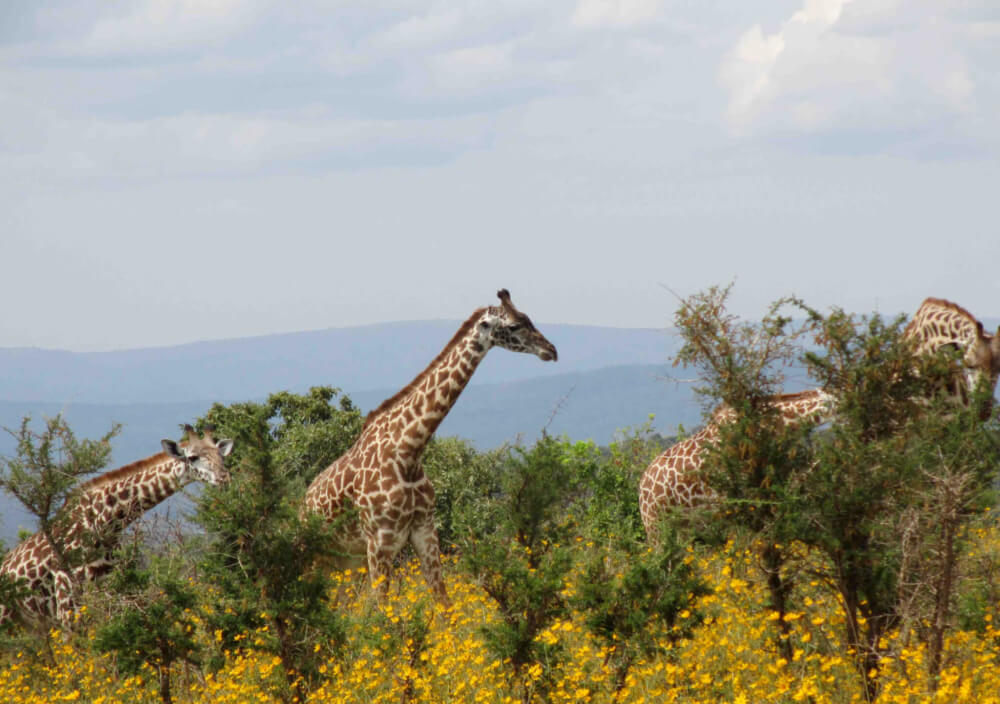
GiraffesAkagera supports a diverse collection of African wildlife. The park is home to elephants, buffaloes, giraffes, zebras, hippos, crocodiles and numerous antelope species, together with a variety of smaller mammals.

The abundance and distribution of wildlife can vary depending on the season, location and time of day, but the combination of different habitats gives visitors a good opportunity to encounter a wide range of species during a safari. Among the antelopes found in the park are:

  • Impala
  • Topi
  • Cape eland
  • Oribi
  • Bushbuck
  • Waterbuck
  • Defassa waterbuck

Other wildlife may include warthogs, bush pigs, monkeys and several nocturnal species. The experience is different from a safari in a vast open savannah such as the Serengeti. Akagera’s combination of woodland, wetlands and rolling grassland means that some animals are easier to spot in open areas while others remain concealed among vegetation.

The Big Five in Akagera

One of the major attractions of Akagera today is the opportunity to see the African Big Five: lion, leopard, elephant, buffalo and rhinoceros.

The return of lions and black rhinoceros was an important milestone in the park’s conservation history.

Lions were reintroduced to Akagera in 2015, while black rhinos were reintroduced in 2017. These conservation efforts helped restore species that had disappeared from the park during earlier periods of conflict and intense wildlife pressure.

Today, Akagera is recognised as a Big Five safari destination in Rwanda, although, as with any wild animal encounter, sightings of particular species cannot be guaranteed.

Elephants

African elephants are among the most impressive animals visitors can encounter in Akagera. They are often seen moving through woodland and savannah or gathering around water sources, particularly during drier periods.

Watching a family group of elephants moving through the landscape is one of the memorable moments of an Akagera safari.

Because elephants are large, intelligent and powerful wild animals, visitors should always remain inside their safari vehicle unless their guide indicates otherwise.

Giraffes

Giraffes are one of the most easily recognisable animals in Akagera. They can often be seen browsing on trees and moving across the savannah. Their height makes them relatively easy to spot, even when they are some distance from the safari vehicle.

Seeing giraffes against the backdrop of Akagera’s open plains and woodland makes for excellent safari photography.

Zebras

Zebras are another common sight on the savannah. Their distinctive black-and-white patterns stand out against the grasslands, particularly when several animals gather together.

Zebras often share grazing areas with antelopes, creating classic African safari scenes.

Buffaloes

Large herds of African buffalo can be encountered in Akagera.

Buffalo are powerful animals and can be particularly impressive when seen in large numbers. They spend time grazing in open areas but may also move towards water and woodland.

As with all wildlife, close encounters should be left to experienced safari guides who understand animal behaviour.

Lions

The return of lions was a major moment in the restoration of Akagera.

After disappearing from the park, lions were reintroduced in 2015 as part of broader conservation efforts.

Today, visitors have the possibility of encountering lions during game drives, although sightings depend on animal movements and luck.

Early morning and late afternoon game drives can be particularly rewarding because wildlife is often more active during the cooler parts of the day.

Black Rhinoceros

Black rhinoceroses were reintroduced to Akagera in 2017, restoring another iconic species to the park.

Their return strengthened Akagera’s status as a Big Five destination and represented an important achievement in the park’s conservation programme.

Rhino sightings are not guaranteed, but their presence adds considerable value to the safari experience.

Leopards

Leopards are among the more elusive predators in Akagera.

They are solitary and spend much of their time in areas where they can remain concealed, making them considerably harder to find than giraffes, zebras or buffalo.

Spotting a leopard is therefore often considered a special safari moment.

A skilled guide who understands the movements of predators can greatly improve the chances of finding one.

Hippos and Crocodiles

Akagera’s lakes and wetlands support large populations of hippos and Nile crocodiles.

Hippos can often be seen gathered in groups in the water, with their heads visible above the surface. They are especially impressive during boat excursions on Lake Ihema.

Crocodiles may be seen lying along the lake’s shores or partially submerged in the water.

A boat safari provides one of the best opportunities to observe both species while learning about the wetland ecosystem from an experienced guide.

Bird Watching in Akagera National Park

Akagera is also one of Rwanda’s outstanding bird watching destinations.

The park supports more than 500 recorded bird species, thanks largely to its variety of habitats.

The combination of lakes, papyrus swamps, woodland and savannah provides habitat for many different bird species.

Some of the birds birders may look for include:

  • African fish eagle
  • Shoebill
  • Papyrus gonolek
  • Grey crowned crane
  • Herons
  • Egrets
  • Cormorants
  • Kingfishers
  • Various raptors and woodland species

The shoebill is particularly sought after by birding enthusiasts. It is a striking and unusual wetland bird that can be difficult to find, making a sighting especially memorable.

Akagera’s birdlife can be enjoyed during game drives, boat safaris and dedicated birding excursions.

Boat Safaris on Lake Ihema

A boat safari on Lake Ihema is one of the most popular activities in Akagera National Park.

Unlike a game drive, where wildlife is viewed from a vehicle on land, the boat takes you onto the water and into the heart of the park’s wetland ecosystem.

During the cruise, you may see:

  • Hippos
  • Nile crocodiles
  • African fish eagles
  • Cormorants
  • Egrets
  • Herons
  • Kingfishers
  • Other water birds

The boat ride is usually a relaxed experience and is particularly enjoyable during the afternoon when the light becomes softer.

It is also an excellent complement to a morning or afternoon game drive.

Game Drives in Akagera National Park

Game drives are the main safari activity in Akagera.

Visitors travel through different sections of the park in a safari vehicle accompanied by an experienced guide.

A typical game drive may take you through open grassland, woodland and areas surrounding the lakes.

The objective is not simply to see as many animals as possible but to understand the ecosystem and observe wildlife behaving naturally.

During a game drive you may encounter giraffes browsing among trees, zebras grazing across open plains, elephants moving through woodland or buffalo gathering near water.

Predator sightings can be particularly exciting, especially when guides locate lions or other carnivores.

Night Game Drives

Akagera also offers the opportunity to experience the park after sunset through night game drives, subject to current park arrangements.

The experience is very different from a daytime safari.

Many African animals become active after dark, and the darkness creates an entirely different atmosphere in the bush. With the help of a spotlight and an experienced guide, visitors may encounter nocturnal species that are rarely seen during the day.

Night drives can be especially interesting for travellers who want to experience another side of Akagera’s wildlife.

Fishing in Akagera

Fishing can also be enjoyed in designated areas of Akagera.

It offers a quieter alternative to game drives and allows visitors to spend time beside the park’s lakes while enjoying the surrounding landscape.

Fishing is subject to park regulations, so visitors should confirm the current rules, permitted locations and equipment requirements before planning a fishing excursion.

Conservation and the Restoration of Akagera

Akagera has undergone an extraordinary conservation transformation.

The park was established in 1934 to protect the region’s wildlife and diverse ecosystems, including savannah, woodland and wetlands.

However, the park later experienced severe pressure as a result of war, poaching, habitat loss and human settlement.

Following the 1994 genocide against the Tutsi and subsequent return of refugees, pressure on land increased. A substantial portion of the park’s former area was converted to settlement and agriculture, reducing its size considerably.

Wildlife populations also suffered heavily during years of instability.

A major change came in 2009, when the Rwanda Development Board entered into a long-term management partnership with African Parks. The partnership led to increased investment in law enforcement, tourism infrastructure, community engagement and wildlife conservation.

The restoration of lions and black rhinoceroses was among the most visible achievements.

Today, Akagera demonstrates how sustained conservation investment can help restore wildlife and create a viable protected area that also benefits surrounding communities.

The Wetlands of Akagera

Wetlands are one of the defining features of the park.

The lakes and papyrus swamps associated with the Kagera River form an important aquatic ecosystem and support a huge variety of wildlife.

These wetlands are particularly important for birds, hippos, crocodiles and fish.

The network of lakes and wetlands also gives Akagera a landscape that is very different from many of East Africa’s better-known dry savannah parks.

For visitors, the wetlands provide beautiful scenery and excellent opportunities for photography and boat excursions.

Community Conservation Around Akagera

The long-term survival of Akagera depends not only on protecting wildlife inside the park but also on maintaining positive relationships with neighbouring communities.

Tourism creates employment and income opportunities for people living around the park, while conservation initiatives can support education, livelihoods and community development.

This relationship between tourism and conservation is an important part of Akagera’s modern story.

Visitors therefore contribute not only to their own safari experience but also to a wider conservation system when they visit responsibly and use legitimate tourism services.

Best Time to Visit Akagera National Park

Akagera can be visited throughout the year, but the experience changes with the seasons.

The drier periods are often considered particularly good for wildlife viewing because animals may concentrate around water sources and vegetation can be less dense.

The wetter periods bring greener landscapes, refreshed wetlands and excellent conditions for photography and bird watching.

For birders, the presence of migratory species during certain periods can make the wet season especially interesting.

There is no single perfect month for everyone. The best time depends on whether your priority is general wildlife viewing, bird watching, photography, or simply enjoying Rwanda’s landscapes.

How Long Should You Spend in Akagera?

A two-day Akagera safari can provide a good introduction to the park.

However, spending three days or more allows you to explore more areas and combine different activities.

A longer stay can include:

Day 1: Arrival and afternoon game drive

Day 2: Morning game drive and afternoon boat safari on Lake Ihema

Day 3: Additional game drive, bird watching or another activity before departure

The ideal duration depends on your wider Rwanda itinerary and whether Akagera is your main safari destination.

Where to Stay in Akagera

There are several accommodation options in and around Akagera, ranging from campsites and budget-friendly accommodation to comfortable lodges and luxury safari camps.

Staying close to the park allows visitors to begin game drives early and spend more time exploring the wildlife areas.

Some travellers choose accommodation near the park entrance, while others prefer lodges located deeper within or close to the park’s scenic areas.

When choosing accommodation, consider:

  • Distance from the park entrance
  • Type of accommodation
  • Meals included
  • Game drive arrangements
  • Boat safari access
  • Budget
  • Level of comfort desired

Akagera Safari from Kigali

One of the advantages of Akagera is its accessibility from Kigali, Rwanda’s capital.

This makes it possible to combine a wildlife safari with a city visit without spending several days travelling between destinations.

Travellers with limited time can arrange a short Akagera safari from Kigali, while those with more time can spend two or three nights in the park.

The combination of Kigali, Akagera and Volcanoes National Park can create an excellent Rwanda itinerary covering culture, savannah wildlife and mountain gorillas.

Combining Akagera with Gorilla Trekking

One of the best ways to experience Rwanda is to combine Akagera National Park with Volcanoes National Park.

The two parks offer completely different environments.

At Akagera, you explore savannah, wetlands and lakes while searching for elephants, buffaloes, giraffes, zebras, lions, rhinos and other wildlife.

At Volcanoes National Park, the focus shifts to the misty Virunga Mountains and mountain gorilla trekking.

A combined itinerary can therefore provide both a classic African wildlife safari and one of the world’s most memorable primate experiences.

For travellers interested in chimpanzees and rainforest, Nyungwe National Park can also be added to create a broader Rwanda wildlife itinerary.

Why Visit Akagera National Park?

Akagera is worth visiting for many reasons:

  • Big Five wildlife: The park is home to lion, leopard, elephant, buffalo and rhino.
  • Beautiful scenery: Savannah, woodland, lakes and wetlands create a diverse landscape.
  • Lake Ihema: Enjoy boat safaris among hippos, crocodiles and water birds.
  • Excellent birding: More than 500 bird species have been recorded.
  • Accessible from Kigali: Akagera is convenient for short Rwanda safari itineraries.
  • Conservation success: Experience a park that has undergone remarkable wildlife restoration.
  • Varied activities: Enjoy game drives, boat safaris, birding and other experiences.
  • Easy to combine: Akagera pairs naturally with Volcanoes National Park and Rwanda’s other attractions.

Frequently Asked Questions About Akagera National Park

What is Akagera National Park famous for?

Akagera is famous for its savannah wildlife, wetlands, lakes, Big Five animals and excellent birdlife. It is Rwanda’s main destination for traditional wildlife safaris.

Is Akagera National Park worth visiting?

Yes. Akagera offers a completely different experience from Rwanda’s mountain gorilla destinations. It is particularly worthwhile for travellers who want to experience savannah wildlife, game drives and boat safaris during a trip to Rwanda.

Can you see the Big Five in Akagera?

Yes. Akagera is home to the Big Five: lion, leopard, elephant, buffalo and rhinoceros. However, sightings of individual species cannot be guaranteed because these are wild animals living freely within the park.

Can you see lions in Akagera?

Yes. Lions were reintroduced to Akagera in 2015 as part of the park’s conservation and restoration programme.

Can you see rhinos in Akagera?

Yes. Black rhinoceroses were reintroduced to Akagera in 2017, helping restore another important species to the ecosystem.

What is the main activity in Akagera National Park?

Game driving is the main activity, while boat safaris on Lake Ihema are another major attraction. Bird watching and other nature-based activities can also be arranged.

How far is Akagera from Kigali?

Akagera is relatively close to Kigali compared with Rwanda’s other major wildlife destinations, making it practical to visit on a short safari from the capital. The exact travel time depends on the park entrance, road conditions and starting point in Kigali.

Conclusion

Akagera National Park is Rwanda’s great savannah wilderness, offering a remarkable contrast to the country’s famous mountain landscapes.

Its combination of open grasslands, woodland, lakes, papyrus wetlands and the Kagera River creates a rich habitat for wildlife. From giraffes and zebras grazing on the plains to elephants, buffaloes, lions and rhinoceroses, the park provides the opportunity for an authentic African safari in Rwanda.

A boat safari on Lake Ihema adds another dimension to the experience, bringing visitors close to hippos, crocodiles and abundant water birds. For bird watchers, the park’s more than 500 recorded bird species make it one of Rwanda’s most rewarding birding destinations.

Perhaps most importantly, Akagera represents an inspiring conservation story. The return of lions and black rhinoceroses and the recovery of wildlife populations demonstrate what sustained conservation efforts can achieve.

For travellers planning a Rwanda safari, Akagera is an excellent destination to combine with Volcanoes National Park for mountain gorilla trekking or Nyungwe National Park for rainforest and chimpanzee experiences. Together, Rwanda’s protected areas offer an unusually diverse safari experience within a relatively small country.

Gorilla Habituation Tours in Bwindi

  • 3 Days Gorilla Habituation Safari in Bwindi
  • 4 Days Gorilla Habituation Experience Safari
  • 5 Days Gorilla Habituation Experience and Wildlife Safaris
  • Gorilla Habituation from Kigali
  • Gorilla Habituation Starting from Entebbe
  • Luxury Gorilla Habituation Tours
  • How to Reach Bwindi Forest for Gorilla Habituation Experience

Gorilla Trekking in

  • 1 Day Gorilla Trek Uganda
  • 2 Day Gorilla Trekking Uganda from Kigali
  • 3 Days Gorilla Trekking Uganda
  • 3 Days Gorilla Trekking in Mgahinga

Recent Posts

About Gorilla Habituation Experience

  • What is Gorilla Habituation and Gorilla Habituation Experience?
  • Gorilla Habituation Activities
  • Bwindi Gorilla Habituation Tours
  • Gorilla Habituation Process
  • Frequently Asked Questions About Gorilla Habituation Experience
  • Gorilla Habituation Experience Rules and Regulations
  • Age Limit for Gorilla Habituation Experience
  • Gorilla Habituation Experience vs Gorilla Trekking
  • Frequently Asked Questions About Gorilla Habituation Experience
  • Why Gorilla Habituation Has a 15-Year Age Limit
  • Semi-Habituated Mountain Gorillas
  • Gorilla Habituation Experience in Uganda from South Africa
  • Gorilla Habituation Certificate
  • Gorilla Trekking Briefing
  • Gorilla Habituation Experience and Survival of Mountain Gorillas
  • Chimpanzee Habituation Experience
  • Uganda Gorilla Habituation vs Rwanda Gorilla Trekking

Gorilla Habituation Guide

  • Guide to Gorilla Habituation Experience in Uganda
  • Best Time for Gorilla Habituation Experience
  • Gorilla Families for Habituation Experience
  • Gorilla Habituation Permit
  • Why Book Your Gorilla Habituation Permit Early
  • How to Reach Bwindi Forest for Gorilla Habituation Experience
  • Where to Stay for Gorilla Habituation Experience
  • What to Wear for Gorilla Habituation
  • What to Pack for Gorilla Habituation Experience
  • Four Hours of Gorilla Habituation Experience
  • Nkuringo Sector Bwindi
  • Gorilla Habituation Experience Briefing
  • Hiring a Porter for Gorilla Habituation Experience
  • Gorilla Habituation vs Chimpanzee Habituation Experience
  • Gorilla Habituation Permit Availability in Uganda
  • How Difficult is Gorilla Habituation in Bwindi
  • How to Book Gorilla Habituation Permits
  • Is Gorilla Habituation Worth It?
  • Photography Tips for Gorilla Habituation

Rwanda Gorilla Tours & Safaris

  • 1 Day Rwanda Gorilla Trek
  • 2 Day Gorilla Trekking Rwanda
  • 2 Days Gorilla Trek Rwanda and Lake Kivu
  • 3 Day Rwanda Gorilla Safari
  • 4 Days Rwanda Gorilla Trekking
  • 6 Days Rwanda Gorilla, Chimps & Golden Monkey Trekking

Where to See Gorillas in Africa?

  • Bwindi Impenetrable National Park
  • Mgahinga Gorilla National Park
  • Volcanoes National Park Rwanda
  • Virunga National Park Congo

Copyright © 2026 Gorilla Habituation Experience in Bwindi, Uganda.

Powered by PressBook WordPress theme